Indian Investments
SIP vs lumpsum in a mutual fund tracker: cash flows, not bragging rights
SIP and lumpsum in a real MF ledger: cash-flow dates, XIRR, and review—without a single one-chart winner of which pattern always beats the other one.
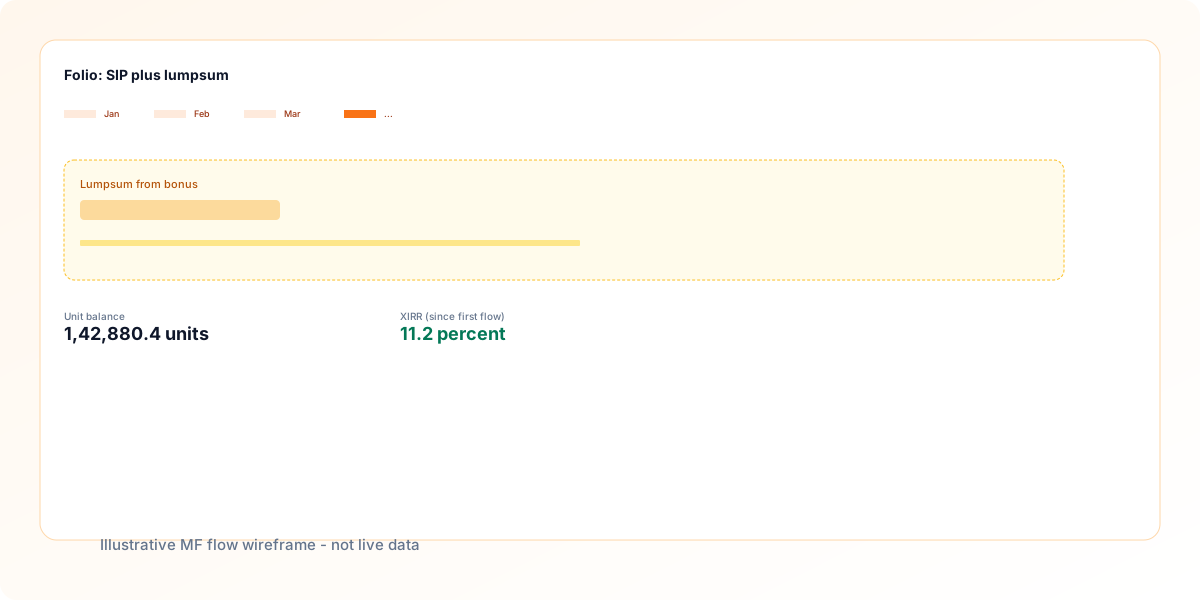
The internet has written SIP vs lumpsum into a false championship fight: one number on a blog, one chart on Twitter, a winner for last March. A mutual fund portfolio tracker has a more modest job. It is not here to anoint a strategy; it is here to make dates and money line up with units and NAVs so that the return you think you earned is the return your cash flows could actually have produced. The spirit of the market’s own investor education, including what AMFI publishes for retail, is the same: understand the product and the fees before the tweetstorm.
SIP and lumpsum are cash-flow patterns, not morals
SIP (systematic investment plan) is a promise to the calendar: a fixed rupee on a known cadence, often from salary, often into a chosen scheme. The virtue is regularity—and the SEBI mutual-fund structure still assumes you can read a scheme information document, pick a fund that matches the risk you meant to take, and not confuse “discipline in saving” with “certainty of outcome”.
A lumpsum is any money that shows up in one shot: an annual bonus, a property tranche, a rebalancing sale from another sleeve. The tracker does not judge whether March or June was a better entry; it records a larger, earlier row in the same folio, with its own NAV and date.
When both patterns live in one Indian household, the honest return story is a blended path. CAGR on a one-time “what if I had put everything in on day one” is a different film from XIRR on the cash flows you actually had.
How the flows show up in a ledger
A serious tracker will store:
- Every credit to the fund with date, amount, NAV, units for each subscription.
- Every SIP line as a repeating rule that generates those credits like standing instructions.
- Switch and STP as paired legs so you are not double-counting money that never left your MF world.
- SWP and redemptions with the same care.
Vanguard and academic work on dollar-cost averaging versus lumpsum in the US is often about return mechanics in a probability sense; the Indian investor’s first use case is simpler: did the sheet from my mutual fund tracker and the CAS agree on 31 March? If not, the debate about which pattern “wins” is beside the point until the units match.
XIRR, CAGR, and the single-number trap
- CAGR answers a clean hypothetical if there were a single buy and a single end value, no flows in the middle. Real books rarely look like that.
- XIRR in Excel, or the equivalent in an app, answers: with my inflows, outflows, and dates, what single annualised rate would explain what I have left? That is usually the return that feels like your life.
When you track the full picture, the MF sleeve is one string in a guitar that also has EPF, NPS, and stocks—a fact many Value Research or Morningstar-style return tables ignore because their site only knows the fund, not the rest of your life.
When to change the pattern, not the tracker
Review your SIPs when your goal horizon shortens, your liquidity buffer thins, or a fund drift in category makes the name you picked no longer the risk you meant. The tracker should show this year’s run-rate and drift in category more clearly than it shows “who won SIP vs lumpsum in 2019.”
For imports, a PDF statement from a registrar or a CSV from your platform is a reasonable ground truth for sync; Artha can help parse the rows so you are not a human OCR. The win is a Sunday evening of reconciliation, not of debate with a spreadsheet you last trusted in 2021.
A mutual fund portfolio tracker that respects SIP and lumpsum does not need to pick a winner in this article. It needs to show the true map of your money in time, then let a product like the Invesh mutual fund path sit under the same roof as the rest of your book. The rest is life and markets—both of which, thankfully, are outside any single JavaScript app.
Frequently asked questions
Is SIP always better than lumpsum?
In real life, SIP is a way to keep investing when the calendar and salary arrive on a schedule, and to avoid betting everything on a single day. A mutual fund tracker's job is to show each flow in the year it actually happened, not to crown one pattern as a universal winner. Market conditions change; your discipline and allocation matter more than a one-year backtest on a website.
Why does my SIP show a different return than a lumpsum in the same fund?
You bought units at different NAVs on different dates. The return that matches your *personal* experience is a money-weighted or IRR style measure, not a single CAGR printed on the plan sheet you opened three years ago.
What is XIRR in a tracker?
It is a return figure that takes the dates and amounts of every cash in and out into account, which is the right class of answer when you have SIPs, STPs, and partial withdrawals. It is not a prediction; it is a report card on the flows you already made.
Should I stop SIP in a down market?
That is a life and allocation question, not a tracker feature. A tracker can show how much of your year is still scheduled, how your asset mix is drifting, and what your run-rate is. It cannot replace a plan, only make the current numbers legible before you act.
How do I reconcile a portfolio with CAMS and KFintech data?
The consolidated account statement (CAS) is a strong cross-check. Your tracker should match folios, units, and the broad NAV as of a known date, then flag anything that is only in one system—often a new folio, a small dividend reinvestment, or a pending order.
Where does Invesh help beyond a sheet?
A purpose-built mutual fund tracker keeps folio and XIRR in one place and can pull CAMS data through Artha so you are not retyping. The full portfolio view is where the MF book meets EPF, NPS, and equity in one number when you are thinking about the whole family.
See everything in one place
Invesh brings stocks, mutual funds, PPF, NPS, EPF, and US stocks into a single dashboard with P&L and Artha for document import.