AI and Finance
Importing broker and CAS PDFs: why AI helps but still needs you
What really happens when you upload a contract note, CAS, or CSV: table extraction, a review step, and why a wealth app is not a bank API yet.
"Connect my account" in a product pitch is a trust and regulation story. "Import this PDF" is a data accuracy and time saving story. Serious fintech has to be good at the second before it promises a nationwide read-only API everywhere. This post is about uploads—contract notes, CAS PDFs, and broker exports—and about treating models as proposals, not oracles.
Two very different product promises
Account linking with a bank or broker, where you hand over credentials to a read-only pipe, is a large security and contract program: consent, revocation, incident response, and often regulatory questions that move on their own clock. A file you export yourself and upload into Artha has a smaller legal surface for most households. It is the same PDF a registrar or broker would email you; you are not inventing a new source of truth, only changing where you paste it for analysis.
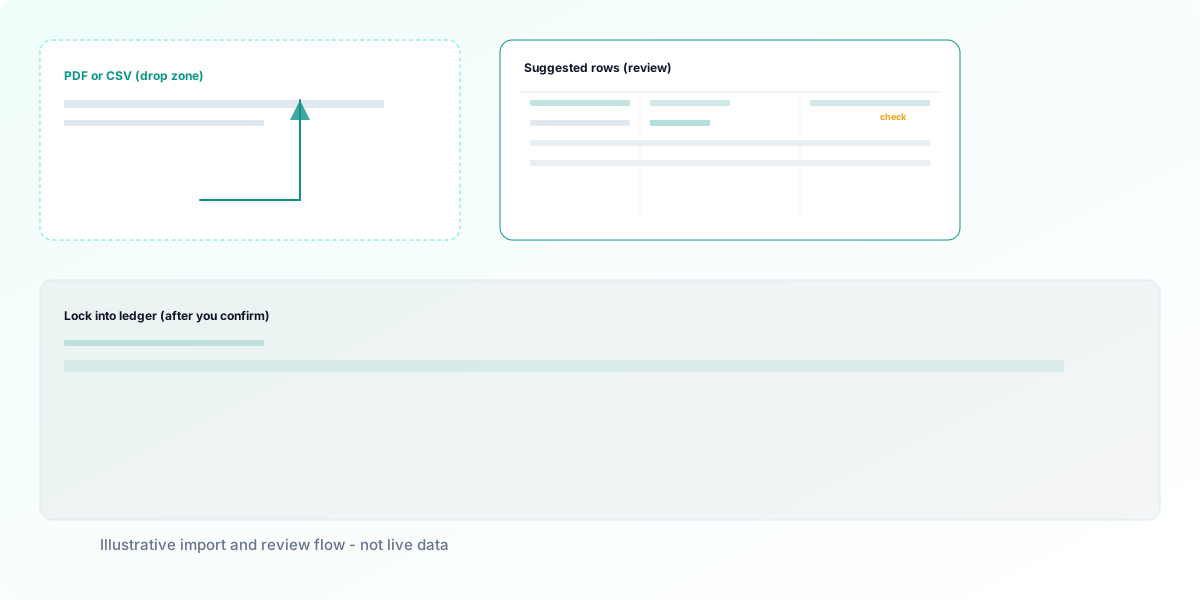
Table extraction from a PDF is a hard problem when tables break across pages, or when a bonus or split line sits in a sub-row that a one-shot OCR pass treats as a smudge. That is why well-designed software separates suggested cells from locked rows with a review step, even when a model is strong enough to guess most of the grid the first time.
What a contract note and a CAS are doing for you
A contract note in Indian retail is a settlement list: your order, your fill, price, quantity, and the charges the broker was allowed to print on that day. You are not looking for a philosophy of markets; you want one clean row per fill in your stock portfolio tracker so average cost and P and L can stay consistent. Your own broker’s help site (for example the current pages at Zerodha or Groww) is the right vocabulary for what a field is called, not a third-party gloss.
A consolidated account statement from a depository (see NSDL and CDSL for what a CAS is for) is a list of ISINs and units. You want that list to line up with your mutual fund tracker and then to sit in the full household portfolio beside NPS, EPF, and listed names. The software can suggest table rows; you still have to be the person who says the row is yours for the year you are closing.
Failure modes to expect
- a photo of a glossy printout and the OCR drops a digit;
- a table that continues on the next page and the parser duplicates a line;
- a name on a note that does not match a joint holder;
- a dividend that lands in cash in the broker while you were still thinking in shares only on the line above.
Artha is built as a propose-then-confirm loop. You upload a PDF or CSV as the Artha page and features surface describe, you look at a grid, you fix a cell, and only then the portfolio and the stock and US sleeves are allowed to move together. That is a different feeling from pasting a password you cannot rotate into a new box.
Security in one line: a file you downloaded while you were already logged in to the bank or broker is a different trust line from handing a third party your live credentials. Read the Invesh privacy story with the same care you use for a bank; do not use any wealth product, ours or not, to avoid reading what you are signing up for. We are not your CA; we are a ledger and a set of suggested rows after you say an import looks good.
Importing with Artha is the boring part of a Sunday when it works and the loud part when a single cell is wrong. Fix the cell, then return to the market questions you actually care about. The Nifty will still be there on Monday; a false lot line should not live past the review step you just promised yourself you would take.
If the same long weekend is when you update mutual funds and stocks, run both through one reconciliation pass so the portfolio view is not half-migrated. A book that is two days behind on NAV in every line is more honest for tax prep than a book with one perfect sleeve and one you forgot to import.
Frequently asked questions
Is uploading a PDF the same as linking my bank or broker login?
No. A PDF or CSV is a file you already downloaded from a session you controlled. Full account linking with read-only API consent is a different product promise, common in some other markets. In India many of us still reconcile from CAMS, KFintech, and broker back-office first.
Why can software mis-read a line that looks clear to me?
Scanned pages, two-column layout, a row split across pages, a bonus or split line, and fees in a sub-table are all structurally hard for a generic parser. Reliable flows show a review screen and let you fix a cell before the lot is locked in your ledger.
What is usually on an Indian contract note?
At a high level: order, execution price, quantity, charges, and the identifiers that should tie a fill to a lot in your demat. Field names differ by broker; the broker help site for your brand is the right vocabulary, not a third-party list.
What is a CAS in plain English?
A consolidated account statement (CAS) is the depository view of your holdings in a period: folio, ISIN, units, and a point-in-time value. NSDL and CDSL publish public material on what a CAS is for; the PDF layout can still differ by where you download it from.
If I do not type my web password into Invesh, is that safer?
Uploading a file you got while logged in elsewhere is a different trust boundary from handing over live credentials. You should still read a privacy policy: retention, model training, and which servers hold the file. A serious import flow does not need your bank web password to parse a passbook you export yourself.
How does Artha differ from a generic upload button?
Artha is wired into the rest of the product: once rows are right, they can power the stock portfolio tracker and the mutual fund tracker, then the household portfolio. The goal is a single review loop, not a one-second magic act.
See everything in one place
Invesh brings stocks, mutual funds, PPF, NPS, EPF, and US stocks into a single dashboard with P&L and Artha for document import.